Hello World KitchenBeta
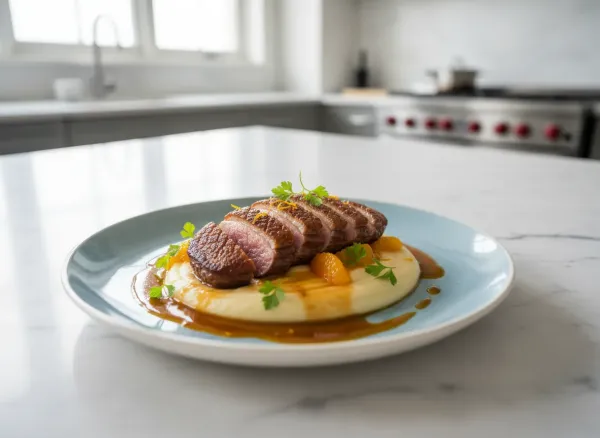
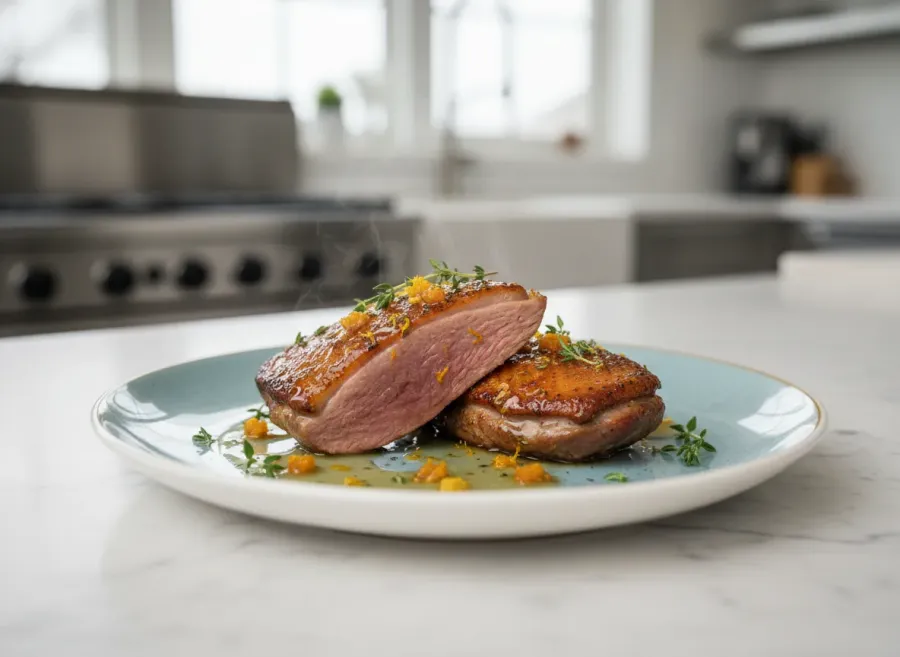
Perfectly cooked, tender duck breast prepared sous vide, finished with a crispy pan-seared skin, and drizzled with a bright, aromatic orange and fresh ginger glaze.
Ingredients
Duck
- 2 pieces Duck breast halves — About 8-10 oz each, skin-on
- 1.5 teaspoons Kosher salt — For seasoning
- 0.5 teaspoons Black pepper — Freshly ground
- 2 sprigs Fresh thyme — For the sous vide bag
Orange-Ginger Glaze
- 0.5 cups Fresh orange juice — Freshly squeezed
- 1 teaspoons Orange zest — Microplaned
- 1 tablespoons Fresh ginger — Peeled and finely grated
- 0.25 cups Duck or chicken stock — Unsalted or low sodium
- 1 tablespoons Honey
- 1 tablespoons Soy sauce — Use tamari if gluten-free
- 1 teaspoons Rice vinegar — Unseasoned
Instructions
-
Set your sous vide immersion circulator to 130°F (54.4°C) for medium-rare to medium.
~5 min130°F yields a perfectly rosy pink center. If you prefer medium, set to 135°F. -
Using a very sharp knife, lightly score the skin of the duck breasts in a crosshatch (diamond) pattern, spacing the cuts about 1/2-inch apart. Be very careful to cut only through the skin and fat, not into the meat.
~5 minScoring allows the fat to render properly during the searing process. -
Season both sides of the duck breasts generously with kosher salt and freshly ground black pepper.
~2 min -
Place the seasoned duck breasts into a vacuum-seal bag or a heavy-duty zip-top bag along with the fresh thyme sprigs. Seal the bag using a vacuum sealer or the water displacement method.
~3 minArrange the breasts in a single layer so they cook evenly. -
Submerge the sealed bag in the sous vide water bath and cook for 2 hours.
~2hYou can leave it in for up to 4 hours, but 2 hours is optimal for texture. -
While the duck is cooking, combine the orange juice, orange zest, grated fresh ginger, stock, honey, soy sauce, and rice vinegar in a small saucepan. Bring to a simmer over medium heat.
~15 min -
Reduce the heat to low and let the glaze simmer until it reduces by half and coats the back of a spoon. Strain through a fine-mesh sieve if you prefer a smooth glaze, or leave it as is for a rustic texture. Keep warm.
-
Remove the duck breasts from the bag and discard the thyme. Thoroughly pat the duck completely dry with paper towels.
~2 minMoisture is the enemy of a crisp sear. Dry the skin as much as possible. -
Place the duck breasts, skin-side down, in a cold, dry cast iron skillet. Place the skillet over medium-low heat.
~8 minStarting in a cold pan gently renders the fat without burning the skin. -
Cook undisturbed until the fat has rendered and the skin is deeply browned and crisp. This usually takes 6 to 10 minutes. If the pan gets too hot, lower the heat.
Pour off excess rendered duck fat into a heatproof jar as it cooks (save it for roasting potatoes!). -
Flip the duck breasts and quickly sear the meat side for just 30 to 60 seconds. Remove from the pan and transfer to a cutting board.
~1 min -
Let the duck rest for 5 minutes. Slice crosswise into 1/2-inch thick medallions. Fan out on a plate and drizzle with the warm orange-ginger glaze.
~5 min
Nutrition
Equipment
- Sous vide immersion circulator
- Vacuum sealer or heavy-duty zip-top bags
- Cast iron skillet
- Small saucepan
- Fine-mesh strainer
- Paper towels
Tips & Storage
- Save the rendered duck fat from the searing process to roast potatoes or vegetables—it adds incredible flavor.
- Make sure your knife is very sharp for scoring the duck to ensure clean cuts without tearing the meat.
- If the glaze gets too thick while resting, stir in a teaspoon of warm water to loosen it up before serving.
- Storage: Store leftover duck breast in an airtight container in the refrigerator for up to 3 days. Reheat gently in a warm oven or enjoy cold over a salad. Store leftover glaze separately.
Tags
🤖 This recipe was created with AI assistance. If you spot a mistake or something that doesn't look right, please report it.