Hello World KitchenBeta
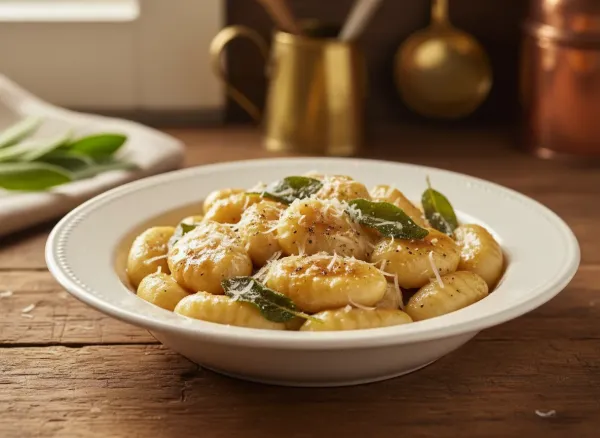
An elegant and visually stunning Italian dish featuring striking jet-black handmade pasta parcels filled with a creamy, aromatic saffron and parmesan ricotta. Served in a delicate garlic and lemon butter sauce.

Ingredients
Squid Ink Pasta Dough
- 2 cups Type 00 flour — Plus extra for dusting
- 3 whole Large eggs — Room temperature
- 1.5 tablespoons Squid ink (cuttlefish ink) — Usually found in small jars or sachets
- 1 tablespoon Extra virgin olive oil
- 0.5 teaspoon Kosher salt
Saffron Ricotta Filling
- 0.25 teaspoon Saffron threads — Generous pinch
- 1 tablespoon Warm water — For blooming saffron
- 1.5 cups Whole milk ricotta cheese — Drained of excess liquid
- 0.5 cup Parmigiano-Reggiano — Finely grated
- 1 whole Large egg yolk
- 0.5 teaspoon Kosher salt — Adjust to taste
- 0.25 teaspoon Black pepper — Freshly ground
Garlic Lemon Butter Sauce
- 4 tablespoons Unsalted butter — Divided
- 2 cloves Garlic — Minced
- 0.25 cup Dry white wine — Such as Pinot Grigio
- 1 teaspoon Lemon zest
- 2 tablespoons Fresh chives — Finely chopped, for garnish
Instructions
-
Bloom the saffron by crushing the threads slightly and mixing them with 1 tablespoon of warm water in a small bowl. Let sit for at least 10 minutes.
~10 minBlooming the saffron draws out its vibrant golden color and deep flavor. -
Make the pasta dough: Pile the flour on a clean work surface and make a well in the center. Add the eggs, squid ink, olive oil, and salt to the well. Use a fork to gently beat the wet ingredients together, gradually incorporating the flour from the inner walls of the well.
~10 minWear a dark apron or gloves if you are worried about the squid ink staining your hands, though it washes off easily with soap. -
Once a shaggy dough forms, use your hands to knead it for about 8-10 minutes until smooth and elastic. Wrap tightly in plastic wrap and let it rest at room temperature for 30 minutes.
~30 minResting allows the gluten to relax, making the dough much easier to roll out. -
Prepare the filling: In a medium bowl, combine the drained ricotta, grated Parmigiano-Reggiano, egg yolk, salt, pepper, and the bloomed saffron liquid. Mix until smooth and evenly colored. Transfer to a piping bag.
~5 minEnsure the ricotta is well-drained to prevent the ravioli from becoming soggy. -
Divide the rested pasta dough into four pieces. Working with one piece at a time (keep the others wrapped), flatten it slightly and pass it through a pasta machine on its widest setting. Continue passing the dough through, reducing the thickness setting each time, until you reach a thin sheet (usually the second-to-last setting).
~15 minDust the dough lightly with flour if it starts sticking to the rollers. -
Lay the pasta sheet flat. Pipe 1-tablespoon mounds of the ricotta filling about 2 inches apart along the center of the sheet. Brush a little water around the filling mounds. Fold the dough over the filling (or place another sheet on top), pressing firmly around the filling to expel any trapped air and seal the edges.
~15 minPushing the air out prevents the ravioli from bursting while boiling. -
Use a ravioli stamp or pastry wheel to cut out the ravioli. Place the finished ravioli on a semolina-dusted baking sheet. Repeat with the remaining dough and filling.
~10 min -
Bring a large pot of heavily salted water to a gentle boil. Carefully drop the ravioli into the water and cook for 3 to 4 minutes, or until they float to the top and the pasta is al dente.
~5 minKeep the boil gentle so the delicate ravioli do not break apart. -
While the ravioli cook, melt 2 tablespoons of butter in a large skillet over medium heat. Add the minced garlic and sauté until fragrant, about 1 minute. Pour in the white wine and simmer until reduced by half. Lower the heat, whisk in the remaining 2 tablespoons of butter and the lemon zest until an emulsified sauce forms.
~5 minAdd a splash of pasta cooking water to help emulsify the sauce if it looks broken. -
Using a slotted spoon, transfer the cooked ravioli directly into the skillet with the sauce. Toss gently to coat. Serve immediately, garnished with fresh chives and extra grated parmesan if desired.
~2 min
Nutrition
Equipment
- Pasta machine
- Large mixing bowl
- Plastic wrap
- Piping bag
- Ravioli stamp or pastry wheel
- Large pot for boiling
- Large skillet
Tips & Storage
- You can make the dough and filling a day ahead to break up the work.
- Uncooked ravioli can be frozen in a single layer on a baking sheet, then transferred to a zip-top bag for up to 2 months. Boil directly from frozen, adding an extra minute to the cook time.
- If you cannot find squid ink, you can substitute with a high-quality pre-made squid ink pasta dough, though making it fresh yields the best texture.
- Storage: Store leftover cooked ravioli in an airtight container in the refrigerator for up to 3 days. Reheat gently in a skillet with a splash of water or butter to prevent sticking. Uncooked ravioli are best frozen rather than refrigerated.
Tags
🤖 This recipe was created with AI assistance. If you spot a mistake or something that doesn't look right, please report it.