Hello World KitchenBeta
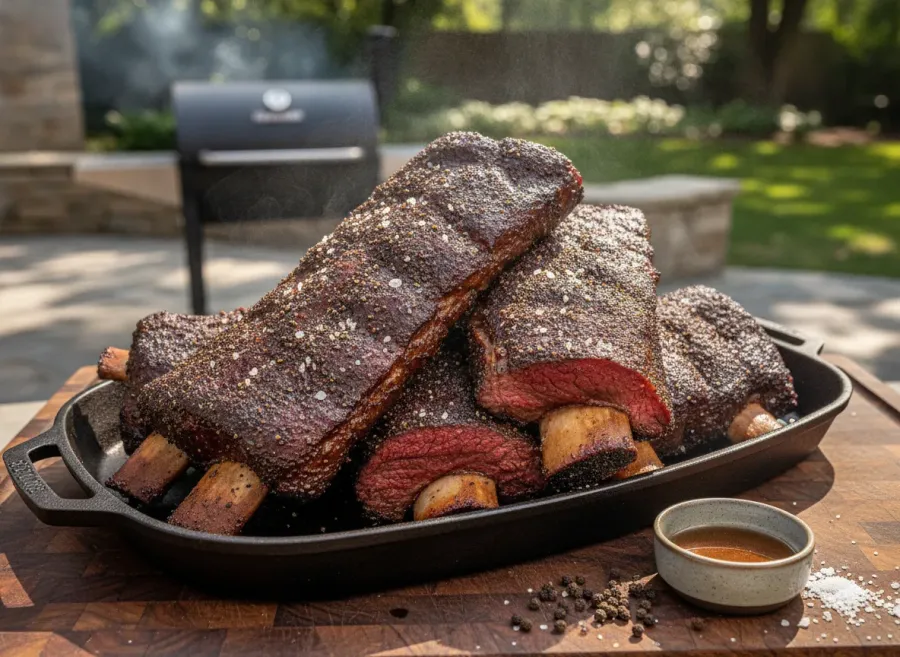
A masterclass guide to creating the ultimate Texas BBQ experience. These massive, melt-in-your-mouth beef plate ribs feature a minimalist salt and pepper rub to highlight the rich, beefy flavor and develop an incredible, crusty bark.
Ingredients
Meat
- 1 rack Beef plate short ribs (3-bone rack) — Approximately 5 to 6 pounds. Ask your butcher for plate ribs, not chuck ribs.
The Rub
- 0.5 cup 16-mesh coarse black pepper — Coarse grind is essential for building the proper Texas bark.
- 0.5 cup Kosher salt — Diamond Crystal preferred. Use slightly less if using Morton.
Spritz
- 0.25 cup Apple cider vinegar — Mixed with water for spritzing.
- 0.25 cup Water — Mixed with vinegar.
Fuel
- 1 batch Oak or Hickory wood splits — Post oak is traditional for Central Texas BBQ.
Instructions
-
Prepare the smoker. Build a fire and establish a clean, thin blue smoke. Stabilize the smoker temperature between 250°F and 275°F. Maintaining this temperature range is crucial for rendering the high fat content of the ribs without drying them out.
~45 minAlways preheat your smoker before prepping the meat so it has time to settle into a clean burn. -
Trim the ribs. Remove the thick layer of fat and silver skin from the top (meat side) of the rack to expose the meat, which allows the rub to penetrate and the bark to form. Do NOT remove the membrane on the bone side; it helps hold the massive ribs together during the long cook.
~10 minLeave a very thin, even layer of fat on top (about 1/4 inch) to protect the meat and render during the cook. -
Mix the rub. Combine the coarse black pepper and kosher salt in a shaker. Apply an even, heavy coat of the rub to all sides of the ribs, patting it in gently. The pepper will create the aerodynamic surface needed to catch smoke and build the iconic black bark.
~5 minDo not use binders like mustard or oil; the natural moisture of the meat is enough for the salt and pepper to adhere. -
Place the ribs in the smoker, bone-side down. Let them smoke undisturbed for the first 3 to 4 hours. Monitor your fire constantly, adding a wood split every 45-60 minutes to maintain a steady 275°F and clean smoke.
~4hKeep the exhaust vent fully open to ensure good airflow, which prevents bitter, stale smoke from ruining the meat. -
Mix the apple cider vinegar and water in a spray bottle. After 4 hours, check the bark. If the edges are looking dry or the bark is fully set (it doesn't rub off when lightly touched), lightly spritz the dry areas. Continue smoking, spritzing every 45 minutes to an hour only if necessary.
~3hDo not spritz wet bark; it will wash away the rub and prevent a crusty bark from forming. -
Check for doneness. Beef ribs are done by feel, not just temperature. Insert your instant-read thermometer into the thickest part of the meat between the bones. It should read between 203°F and 210°F, but more importantly, the probe should slide in with zero resistance, like inserting a hot knife into room-temperature butter.
~60 minIf the meat feels tight, let it cook longer, checking every 15-20 minutes. -
Rest the meat. Once tender, remove the ribs from the smoker. Let them sit at room temperature for 15-20 minutes to stop the cooking process. Then, wrap them tightly in unwaxed butcher paper, and place them in an insulated cooler (without ice) to rest.
~2hResting allows the collagen to finish converting to gelatin and the juices to redistribute. Do not skip this step; a 2-hour rest is the minimum for true masterclass results. -
Slice and serve. Unwrap the ribs, flip them bone-side up to see the bones clearly, and slice cleanly between each bone. Serve immediately.
~5 minUse a long, sharp slicing knife for clean, uniform slices that showcase the smoke ring.
Nutrition
Equipment
- Smoker (offset preferred)
- Instant-read meat thermometer
- Spray bottle
- Unwaxed butcher paper
- Sharp boning or trimming knife
- Insulated cooler
Tips & Storage
- Wood choice matters: Post oak provides a mild, clean smoke that complements beef perfectly without overpowering it.
- Fire management is 80% of BBQ. Keep a small, hot fire rather than a large, smoldering one.
- Beef plate ribs have a very high fat content; if they seem dry, they are usually undercooked, not overcooked. The fat hasn't fully rendered.
- Storage: Wrap leftover ribs tightly in butcher paper, then in aluminum foil, or store in an airtight container in the refrigerator for up to 4 days. Reheat slowly in a 250°F oven with a splash of beef broth until warmed through.
Tags
🤖 This recipe was created with AI assistance. If you spot a mistake or something that doesn't look right, please report it.